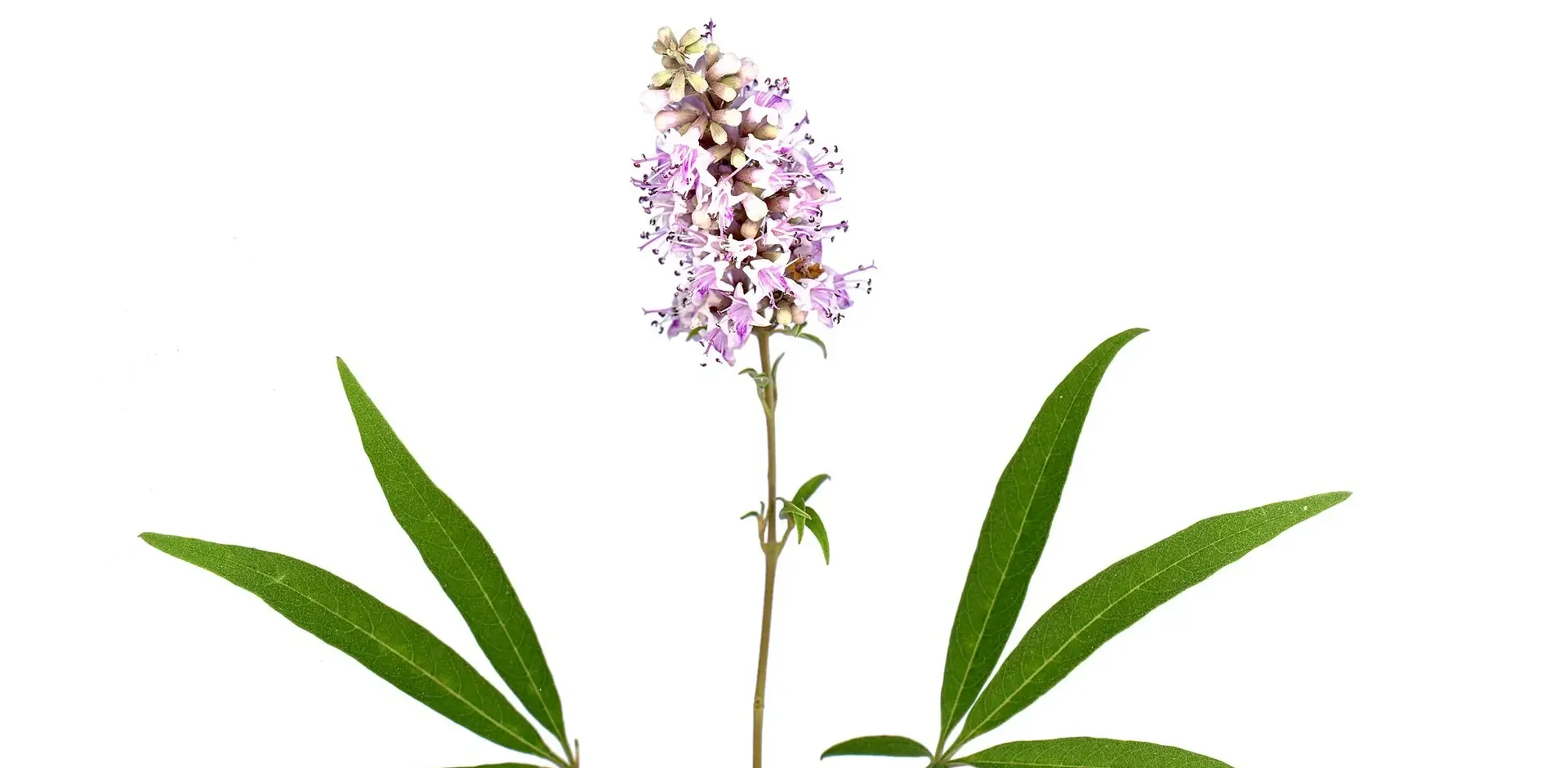
Despite having the common name chasteberry (deriving from the ancient belief it promotes chastity), Vitex agnus-castus is often used to promote female fertility and hormonal balance1.
A well-established menstrual cycle herb
Vitex has German Commission E approval for menstrual cycle irregularities, premenstrual syndrome (PMS) and breast pain2. Commission E was a government-appointed expert panel that reviewed the safety and efficacy of herbal medicines. More recent research supports their conclusions, including a retrospective cohort study of patients with menstrual cycle disorders3 and a narrative review of its use in gynaecology4.
How vitex works
Rather than acting as a hormone itself, vitex appears to work through the body’s signalling pathways. Its diterpenes inhibit the secretion of prolactin5, relieving PMS symptoms and benefitting fertility6. A 2023 review found that vitex improved symptoms in patients with mild hyperprolactinaemia7.
Vitex It normalises oestrogen, while increasing progesterone (important after ovulation to either prepare for ovulation or menstruation)8 and can restore balance after using the contraceptive pill9.
When to work with vitex
In practice, vitex is considered for a wide range of menstrual cycle-related concerns. These include irregular or absent periods, heavy or frequent bleeding, cyclical breast tenderness, PMS, luteal phase complaints, poor lactation and menopausal symptoms10. In one case, a 28-year-old woman taking vitex over three cycles noticed relief from PMS symptoms including anxiety, cravings, irritability and mood changes.
Vitex is usually taken as a tincture, an infusion of the berries or as dried herb, with a typical daily range of 3–6 g of dried berry10. Its effects tend to build gradually, which is why it is often taken consistently over several cycles rather than for a few days.
Safety and cautions
Vitex should be avoided alongside contraceptives, progestins, HRT or dopamine-receptor antagonists, and caution is advised in pregnancy11. Care is also needed in women under 20, whose hormonal axis is easily disrupted, and in those with oestrogen- or progesterone-sensitive tumours. Possible side effects include digestive upset, nausea, skin reactions and headaches10.
It is recommended to take vitex under the guidance of a qualified herbalist, particularly if you take other medication or are trying to conceive.
References
- Bokelmann JM. Medicinal herbs in primary care. Elsevier; 2022.
- Blumenthal M, Busse WR, Goldberg A, Gruenwald J, Hall T, Riggins CW, et al., editors. The complete German Commission E monographs: therapeutic guide to herbal medicines. American Botanical Council; 1998.
- Höller M, Steindl H, Abramov-Sommariva D, Kleemann J, Loleit A, Abels C, et al. Use of Vitex agnus-castus in patients with menstrual cycle disorders: a single-center retrospective longitudinal cohort study. Arch Gynecol Obstet. 2024;309(5):2089–98. doi:10.1007/s00404-023-07363-4
- Mendes C, Fonseca AMD, Alves MS, Bayer LHCM, Veiga ECA, Sorpreso ICE, et al. Narrative review of Vitex agnus-castus in symptoms in gynecology. Rev Assoc Med Bras. 2022;68(5):716–9. doi:10.1590/1806-9282.20220174
- Menzies-Trull C. Herbal medicine keys to physiomedicalism including pharmacopoeia. 3rd ed. Faculty of Physiomedical Herbal Medicine; 2022.
- Lord R. Clinical herbalism: plant wisdom from east and west. Elsevier; 2022.
- Puglia LT, Lowry J, Tamagno G. Vitex agnus castus effects on hyperprolactinaemia. Front Endocrinol. 2023;14:1269781. doi:10.3389/fendo.2023.1269781
- Tierra M. The way of herbs. Gallery Books; 1998.
- Hoffmann D. Medical herbalism. Healing Arts Press; 2003.
- Thomsen M. The phytotherapy desk reference. 6th ed. Aeon Books; 2022.
- Alfs M. 300 herbs: their indications and their contraindications. Aeon Books; 2022.
Header image: Vitex agnus-castus By Osnat Ravid Amir – Own work, CC BY-SA 4.0
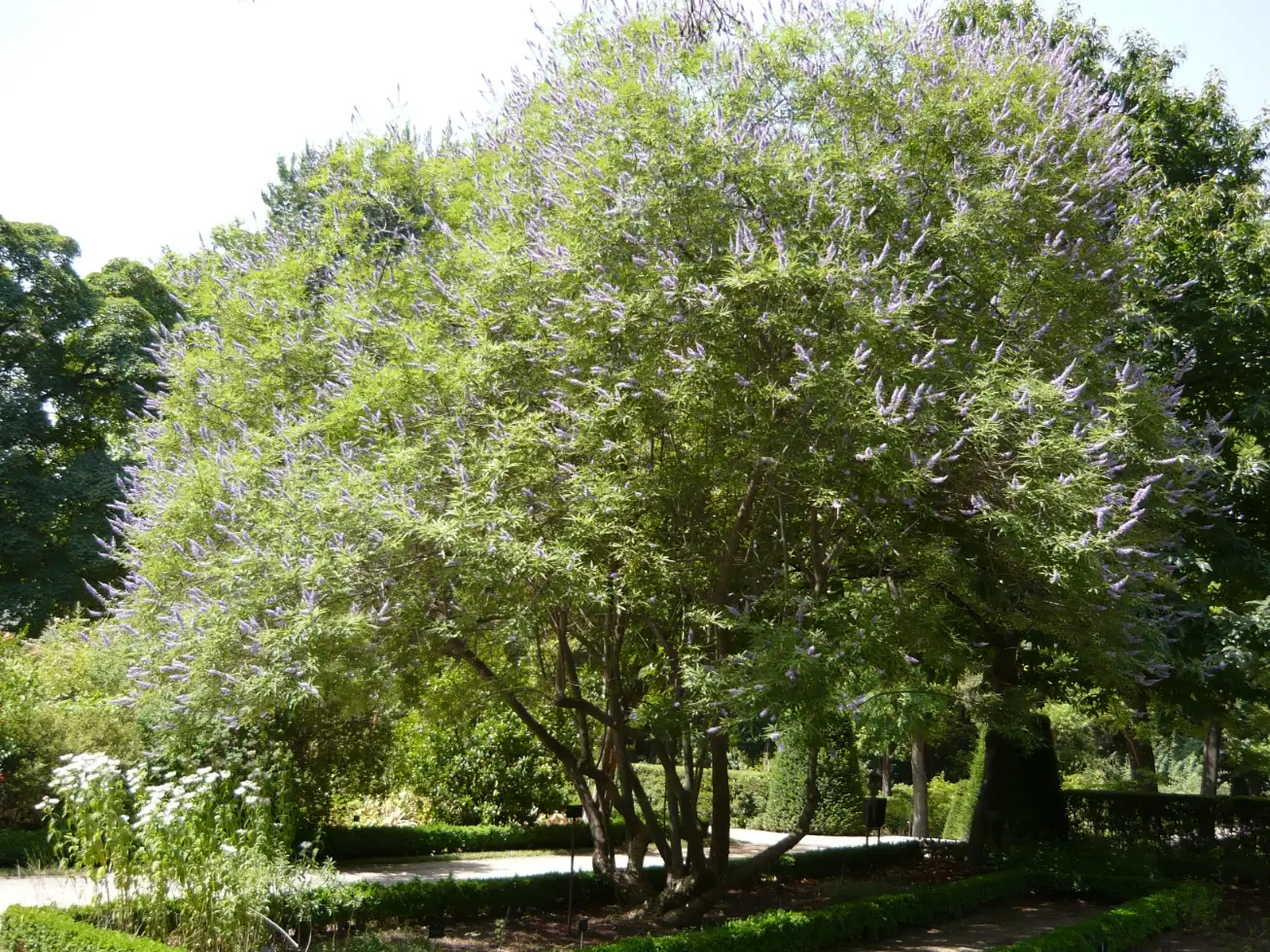
Body image: Vitex agnus-castus By Cillas – Own work, CC BY-SA 4.0