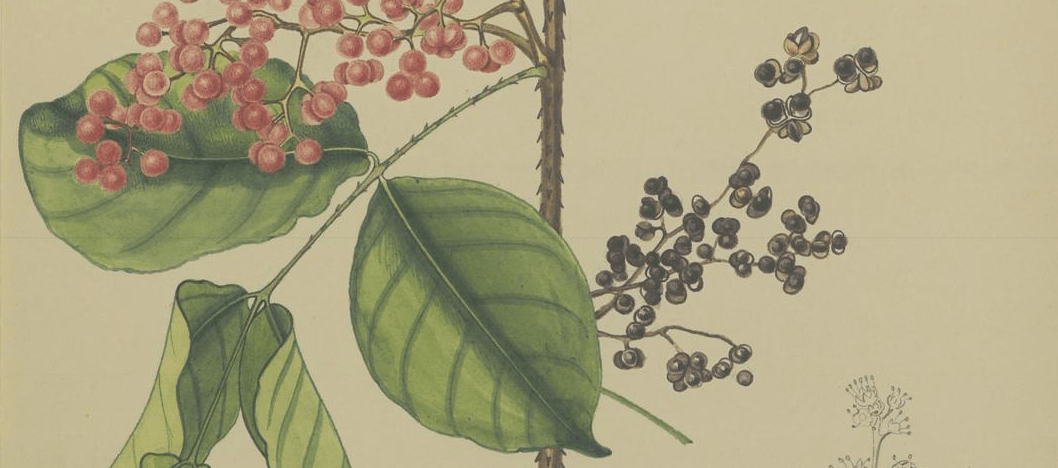
Prickly ash (Zanthoxylum spp.) is a spiky shrub native to the United States and its bark is used to help improve sluggish circulation. Two species are used fairly interchangeably, northern (Z. americanum) and southern (Z. clava-herculis), although the southern is often considered the more active1.
From toothache tree to circulatory support
Indigenous Peoples of North America chewed the bark and berries for rheumatism and toothache, which is how it earned its nickname, the toothache tree2. In the nineteenth century, herbalists were using prickly ash to stimulate the circulation2,3.
A warm tingle
A drop of the tincture on your tongue produces a slow, warming tingle4. This is due to natural compounds (alkylamides and isobutylamides) also found in echinacea. They ease pain and inflammation and calm spasm5 and alleviate cardiovascular system-harming oxidative stress6.
Who it might help
Traditionally, prickly ash has been used for sluggish circulation: cold hands and feet, chilblains, Raynaud’s, and cramping leg pain when walking1,7,8. It can gently lift mildly low blood pressure, though more slowly than, for example, cayenne (Capsium spp.)9,10.
Prickly ash is also used for astringing (tightening) the veins, including varicose veins, and to strengthen the heart muscle11. In two placebo-controlled trials, a high dose of Zanthoxylum extract improved haemorrhoids and varicose veins, including the flow of blood through the veins7. The berries are also used for the small arteries12.
Related species have also been found to contain compounds which demonstrate anti-sickling activities and anti-diabetic and blood lipid-lowering effects13,14.
Things to know
Prickly ash should be avoided if you have stomach or gut ulcers or inflammation, or if you are pregnant or breastfeeding. The bark may boost the effect of blood thinners and blood pressure medication, so tell your practitioner if you take either8,15,16.
References
- Fisher C. Materia medica of western herbs. Aeon Books; 2018.
- Bartram T. Bartram’s encyclopedia of herbal medicine. Robinson; 1998.
- Chevallier A. Encyclopedia of herbal medicine. Dorling Kindersley; 2016.
- Ellingwood F. The American materia medica, therapeutics and pharmacognosy. Ellingwood’s Therapeutist; 1919.
- Menzies-Trull C. Herbal medicine keys to physiomedicalism including pharmacopoeia. 3rd ed. Faculty of Physiomedical Herbal Medicine; 2022.
- Ngum JA, Tatang FJ, Toumeni MH, Nguengo SN, Simo USF, Mezajou CF, et al. An overview of natural products that modulate the expression of non-coding RNAs involved in oxidative stress and inflammation-associated disorders. Front Pharmacol. 2023;14:1144836. doi:10.3389/fphar.2023.1144836
- Bone K. Functional herbal therapy. Aeon Books; 2021.
- Alfs M. 300 herbs: their indications and their contraindications. Aeon Books; 2022.
- Bone K, Mills S. Principles and practice of phytotherapy. 2nd ed. Elsevier Health Sciences; 2013.
- Hoffmann D. Medical herbalism. Healing Arts Press; 2003.
- Maier K. Energetic herbalism. Chelsea Green Publishing; 2021.
- Hedley C, Shaw N. Plant medicine. Aeon Books; 2022.
- Okagu IU, Ndefo JC, Aham EC, Udenigwe CC. Zanthoxylum species: a review of traditional uses, phytochemistry and pharmacology in relation to cancer, infectious diseases and sickle cell anemia. Front Pharmacol. 2021;12:713090. doi:10.3389/fphar.2021.713090
- Okagu IU, Ndefo JC, Aham EC, Udenigwe CC. Zanthoxylum species: a comprehensive review of traditional uses, phytochemistry, pharmacological and nutraceutical applications. Molecules. 2021;26(13):4023. doi:10.3390/molecules26134023
- Brinker F. Herbal contraindications and drug interactions plus herbal adjuncts with medicines. 4th ed. Eclectic Medical Publications; 2010.
- McIntyre A. The complete herbal tutor. Aeon Books; 2019.
- Cabrera C. Pain – always consider the cause of pain. Medical Herbalism [Internet]. 1994 [cited 2026 Oct 18]. Available from: https://www.medherb.com/Therapeutics/Pain_-_Always_Consider_the_Cause_of_Pain_.htm#_VPID_83
Header image: Zanthoxylum. Naturalis Biodiversity Center, CC0, via Wikimedia Commons

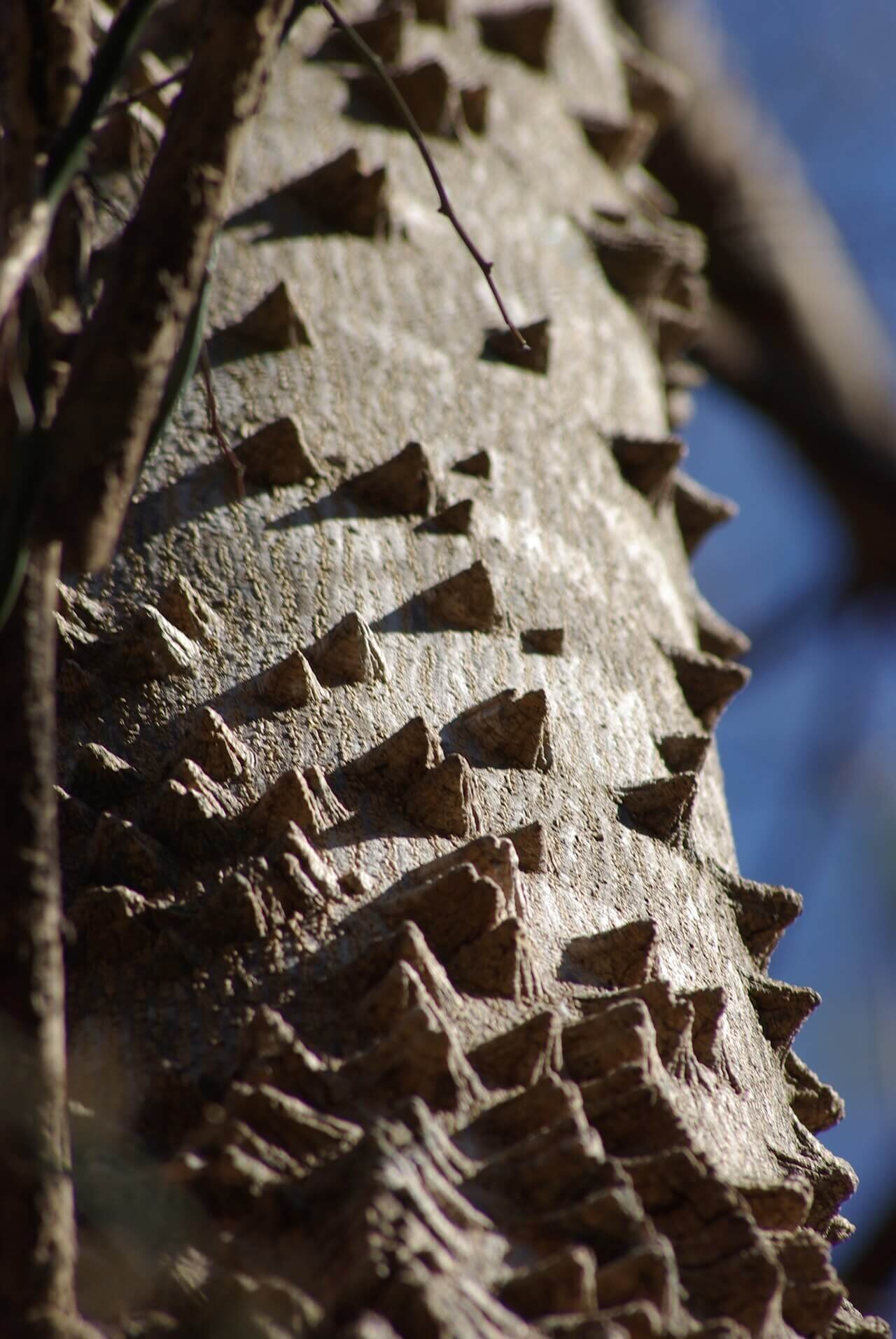
Body image: Hercules Club Zanthoxylum clava-herculis Gaberlunzi (Richard Murphy), CC BY-SA 3.0, via Wikimedia Commons
