Summary
- Lobelia is a traditional respiratory remedy for asthma, chronic bronchitis, non-productive cough, croup and pleurisy.
- Its alkaloids work in a paradoxical way, one relaxes airway smooth muscle whilst another stimulates the respiratory drive before relaxing, together easing wheeze/tightness and helping clear stuck mucus.
- Lobelia is potent and a UK-restricted herb which requires practitioner prescription and supervision.
Lobelia (Lobelia inflata), also known as Indian tobacco, asthma weed or pukeweed, is a herb long valued for its effectiveness on the lungs1,2.
A traditional respiratory remedy
Generations of Native American peoples have smoked lobelia (hence the name ‘Indian tobacco’), a practice adopted by nineteenth-century US Eclectic physicians as a lung, heart and musculoskeletal antispasmodic4,5. Herbalists continue to work with it due to its effectiveness in treating asthma, chronic bronchitis with stubborn mucus, non-productive cough, croup and pleurisy3,6.
Easing the breath
Lobelia’s alkaloids act in a fascinating, seemingly paradoxical way. Isolobelanine relaxes the smooth muscle of the airways, easing tight, spasming bronchioles, while lobeline first stimulates the central nervous system and respiratory drive before a relaxing phase7,8. Together these actions can ease the wheeze and tightness of an asthma attack while helping shift stuck mucus3,8.
Lobeline also binds to the same nerve receptors as nicotine, acting as both agonist and antagonist and damping nicotine-driven dopamine release hence the reason lobelia has been used to support the stopping of tobacco smoking4,9.
Working together
Lobelia combines well with other lung- and throat-soothing herbs10, such as cramp bark (Viburnum opulus) to ease muscular spasm11, chili (Capsicum spp) to enhance its diffusive action12, and prickly ash (Zanthoxylum spp.) for its effect on the respiratory mucosa8.
Demanding respect
Because of its potency, lobelia is a restricted herb in the UK, available only through a qualified practitioner2,13. It should be avoided in pregnancy, heart disease and alongside certain medications, and higher doses can bring on nausea or vomiting (hence the name ‘pukeweed’)2. Used with consideration, though, lobelia remains one of the most effective botanical tools for supporting breathing.
References
- Bartram T. Bartram’s encyclopedia of herbal medicine. London: Robinson; 1998.
- Brinker F. Herbal contraindications and drug interactions plus herbal adjuncts with medicines. 4th ed. Sandy (OR): Eclectic Medical Publications; 2010.
- Bone K, Mills S. Principles and practice of phytotherapy. 2nd ed. St Louis (MO): Elsevier Health Sciences; 2013.
- Fisher C. Materia medica of western herbs. London: Aeon Books; 2018.
- Winston D. Simple herbal extracts – lobelia [Internet]. 2012 [cited 2026 Sep 26]. Available from: https://www.davidwinston.org/extracts/lobelia.html
- Menzies-Trull C. Herbal medicine keys to physiomedicalism including pharmacopoeia. 3rd ed. Faculty of Physiomedical Herbal Medicine; 2022.
- Hoffmann D. Medical herbalism. Rochester (VT): Healing Arts Press; 2003.
- Wood M. The book of herbal wisdom: using plants as medicines. Berkeley (CA): North Atlantic Books; 1997.
- Dwoskin LP, Crooks PA. A novel mechanism of action and potential use for lobeline as a treatment for psychostimulant abuse. Biochem Pharmacol. 2002;63(2):89-98. doi:10.1016/s0006-2952(01)00899-1
- Stansbury J, Saunders PR, Zampieron ER. The use of lobelia in the treatment of asthma and respiratory illness. J Restor Med. 2013;2(1):94-100. doi:10.14200/jrm.2013.2.0109
- Mills S. Waxing lyrical about lobelia and ephedra [conference session]. CPP Phytotherapy Using Schedule 20 Part 2 and Restricted Herbs; 2023 Nov 11; London, United Kingdom.
- Chevallier A. Encyclopedia of herbal medicine. London: Dorling Kindersley; 2016.
- Medicines and Healthcare products Regulatory Agency (MHRA). The Human Medicines Regulations 2012 [Internet]. 2012 [cited 2026 Sep 26]. Available from: https://www.legislation.gov.uk/uksi/2012/1916/contents
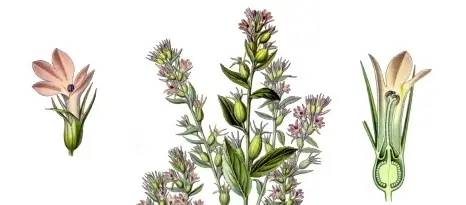
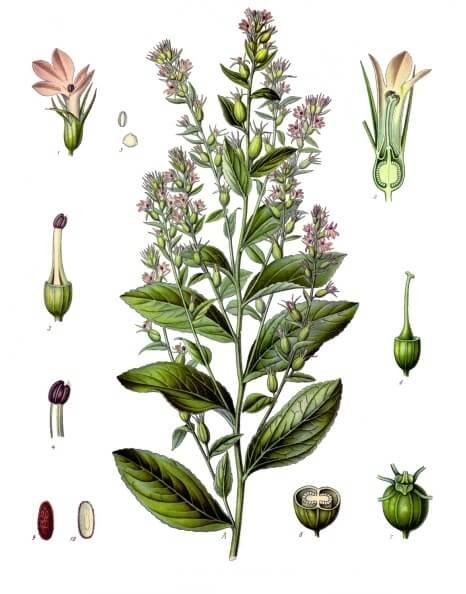
Image: Lobelia inflata. Franz Eugen Köhler, Köhler’s Medizinal-Pflanzen, Public domain, via Wikimedia Commons
