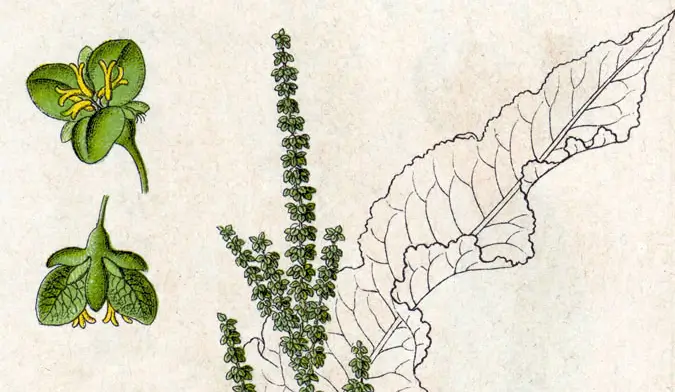
A bitter root with a long history
Yellow dock (Rumex crispus) is a bitter, astringent root long used in herbal medicine for digestive complaints, from sluggish bowels to liver congestion1. Traditionally regarded as cooling and drying, it is noted for its alterative, digestive, hepatic and mild purgative actions2, making it a choice for a range of gut-related issues.
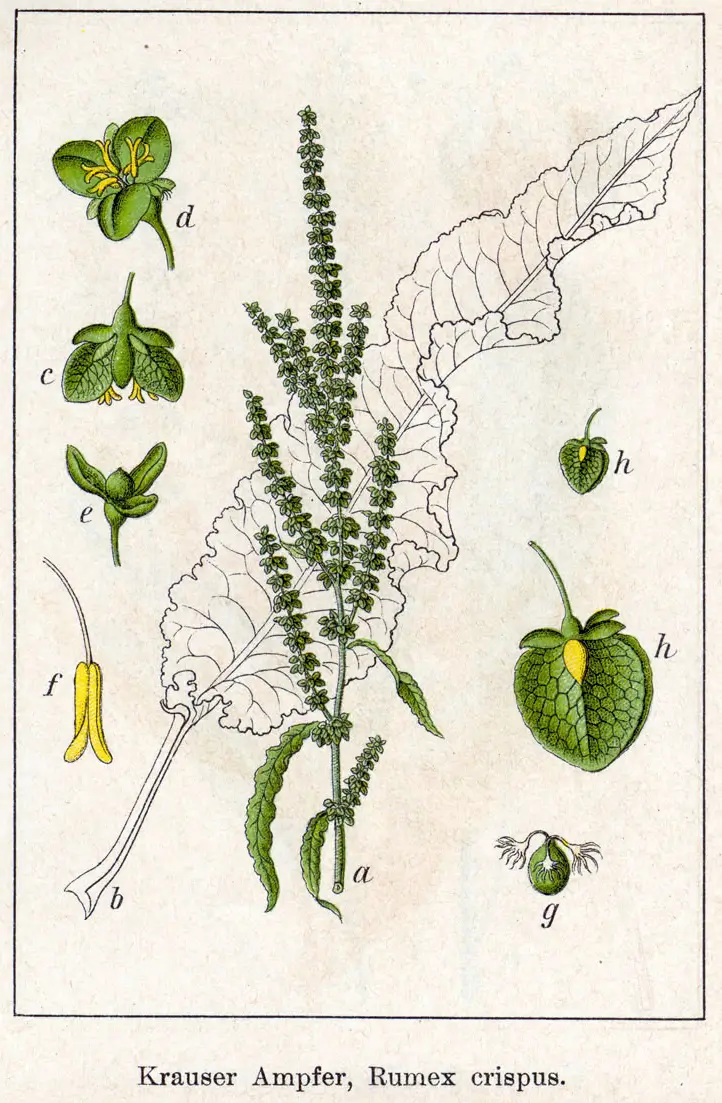
Stimulating bile and supporting digestion
As a bitter herb and cholagogue, yellow dock stimulates bile flow and helps calm inflammation within the digestive tract3,4, which is why it has traditionally been indicated for indigestion, flatulence and an atonic stomach5. Its combined bitter and astringent qualities also support the liver, helping to clear hepatic congestion6. For this reason, yellow dock is often paired with other depuratives (blood purifiers) such as dandelion (Taraxacum officinale) and burdock (Arctium lappa) in longer-lasting, toxic conditions7.
Easing constipation and diarrhoea
Yellow dock’s anthraquinone glycoside content (around 3–4%) gives the root a mild, stimulating laxative action, gently speeding the passage of food through the gut8,9. Interestingly, its tannin content can have an opposite effect too: as an astringent, yellow dock is considered a useful remedy for acute diarrhoea and dysentery, helping to firm the bowel back up6. This dual action explains why it is valued as a balancing, rather than purely purgative, digestive herb.
Antimicrobial and anthelmintic potential
Studies into yellow dock’s antimicrobial effects indicate that it acts against some microbes (fungal and bacteria) and parasites (e.g. Trypanosoma and Plasmodium)10. Multiple constituents, including the anthraquinone emodin, contribute to its antimicrobial activity against methicillin-resistant Staphylococcus aureus (MRSA)11. Additionally, a 2021 study highlighted the anthelmintic potential of yellow dock against the roundworm Caenorhabditis elegans12.
Cautions and contraindications
Because of its stimulating laxative action, yellow dock is not suitable for continuous use or high doses, and should be avoided in patients with diabetes, renal failure or where there is an intestinal obstruction13,14. Anyone, particularly if pregnant, breastfeeding, or considering giving it to a child, should seek professional advice before use14. As with any herbal remedy, it works best as part of a considered approach guided by a qualified practitioner.
References
- Fisher C. Materia medica of western herbs. Aeon Books; 2018.
- Hoffmann D. Medical herbalism. Healing Arts Press; 2003.
- Easley T, Horne S. The modern herbal dispensatory. North Atlantic Books; 2016.
- Jones L. A working herbal dispensary: respecting herbs as individuals.Aeon Books; 2023.
- Menzies-Trull C. Herbal medicine keys to physiomedicalism including pharmacopoeia. 3rd ed. Faculty of Physiomedical Herbal Medicine; 2022.
- Hedley C, Shaw N. Plant medicine. Waddell G, editor. London: Aeon Books; 2023.
- Chevallier A. Encyclopedia of herbal medicine. Dorling Kindersley; 2016.
- Taylor S. The humoral herbal. Aeon Books; 2021.
- Kress H. Practical herbs 1. Aeon Books; 2018.
- Idris OA, Wintola OA, Afolayan AJ. Evaluation of the bioactivities of Rumex crispus L. leaves and root extracts using toxicity, antimicrobial, and antiparasitic assays. Evid Based Complement Alternat Med. 2019;2019:6825297.
- Pelzer CV, Houriet J, Crandall WJ, Todd DA, Cech NB, Jones DD Jr. More than just a weed: an exploration of the antimicrobial activity of Rumex crispus using a multivariate data analysis approach. Planta Med. 2022;88(9-10):753-61.
- Idris OA, Wintola OA, Afolayan AJ. Anthelmintic potency of Rumex crispus L. extracts against Caenorhabditis elegans and non-targeted identification of the bioactive compounds. Saudi J Biol Sci. 2022;29(1):541-9.
- Thomsen M. The phytotherapy desk reference. 6th ed. Aeon Books; 2022.
- Brinker F. Herbal contraindications and drug interactions plus herbal adjuncts with medicines. 4th ed. Eclectic Medical Publications; 2010.
Image: Rumex crispus Af Johann Georg Sturm (Painter: Jacob Sturm) – Fig. from book Deutschlands Flora in Abbildungen at http://www.biolib.de, Public Domain