We all know that summer nights can wreak havoc on sleep. There are lots of conflicting media stories on the topic of wearing pyjamas (or not) in hot weather and how this can affect sleep. Does what you wear to bed actually matter?
Why temperature drives sleep
As bedtime approaches, your core body temperature needs to drop by around 0.3–0.5°C. This happens through blood vessels near the skin widening and releasing heat, working alongside the hormone melatonin release to signal to your brain that it’s time to switch off1,2.
Anything that interferes with this natural cooling, such as too many layers, a stuffy room, or humidity, can delay sleep onset and lead to more frequent waking through the night3.
The case for going pyjama-free in summer
In warm weather, the main challenge is getting rid of excess heat. Higher temperatures are linked to taking longer to fall asleep, less deep sleep, and more night-time awakenings. Sleeping with little or no clothing can help the body dissipate heat more freely and improve comfort4.
The trade-off is hygiene. Direct skin contact with sheets means sweat and dead skin cells build up faster, so bedding needs washing more often3.
When lightweight pyjamas still help
For some people, going without isn’t the full answer:
- Menopause and hot flushes: light, breathable clothing plus good ventilation can reduce disrupted sleep, though it won’t stop hot flushes altogether.
- Night sweats or excessive sweating (hyperhidrosis): sleeping without clothing can help sweat evaporate but may leave bedding damp. Wearing and changing light, breathable sleepwear is often more practical than changing bedding.
- Sensitive skin/ skin conditions (e.g. eczema): soft, breathable fabric without rough seams can protect against friction and irritants, even in warm weather3.
The main takeaway
The evidence suggests it isn’t really about pyjamas versus no pyjamas — it’s about keeping a stable, cool thermal environment overnight. A bedroom temperature of roughly 15–20°C, good airflow, breathable bedding, and natural fabrics like cotton or linen matter more than the presence or absence of nightwear itself.
References
- NHS. Melatonin [Internet]. London: National Health Service; [cited 2026 Jul 8]. Available from: https://www.nhs.uk/medicines/melatonin/
- Kräuchi K, Cajochen C, Pache M, Flammer J, Wirz-Justice A. Thermoregulatory effects of melatonin in relation to sleepiness. Chronobiol Int. 2006;23(1-2):475-84.
- Antequera Martín-Portugués J. Pajamas or no pajamas: what affects sleep quality most? Medscape [Internet]. 2026 Jun 22 [cited 2026 Jul 8]. Available from: Medscape Europe.
- Chevance G, Minor K, Vielma C, Campi E, O’Callaghan-Gordo C, Basagaña X, et al. A systematic review of ambient heat and sleep in a warming climate. Sleep Medicine Reviews. 2024 Jun 1;75:101915. doi:10.1016/j.smrv.2024.101915
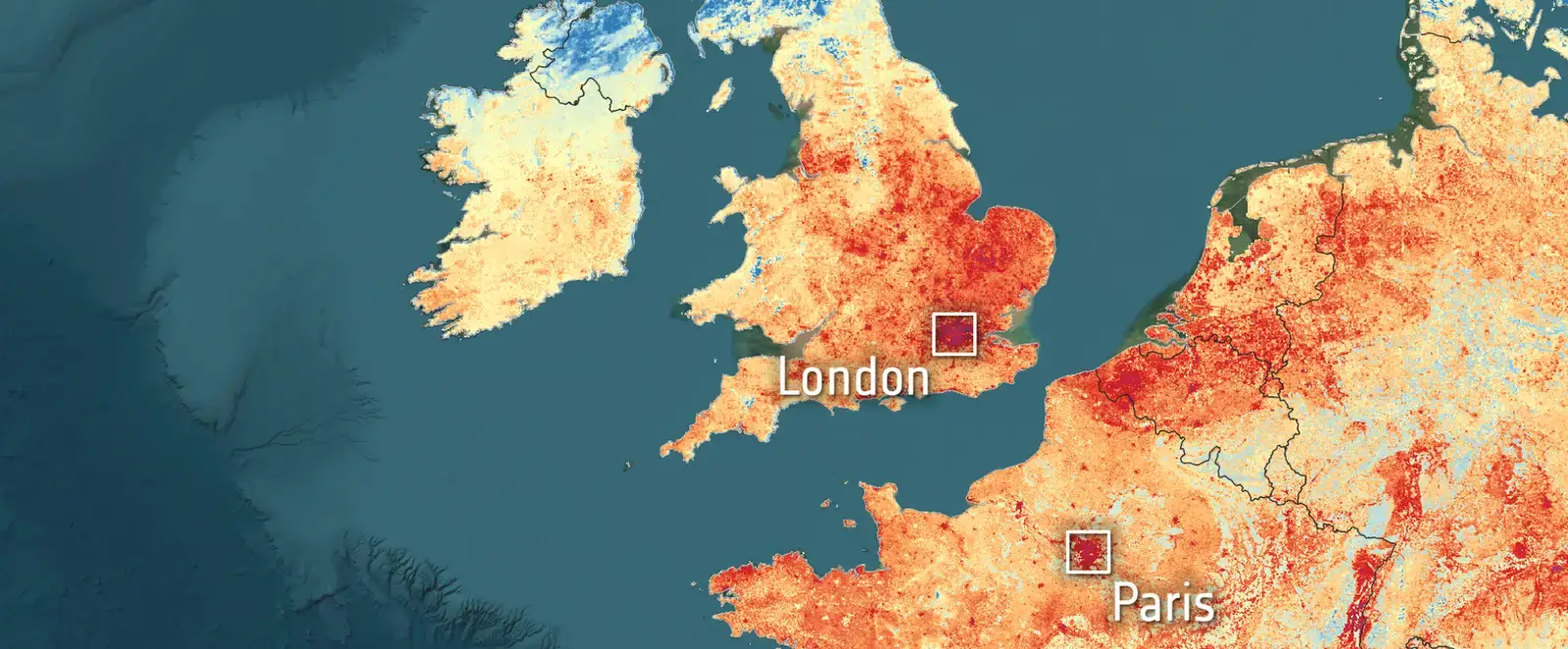
Image: modified Copernicus Sentinel data 2026 ESA, CC BY-SA IGO 3.0