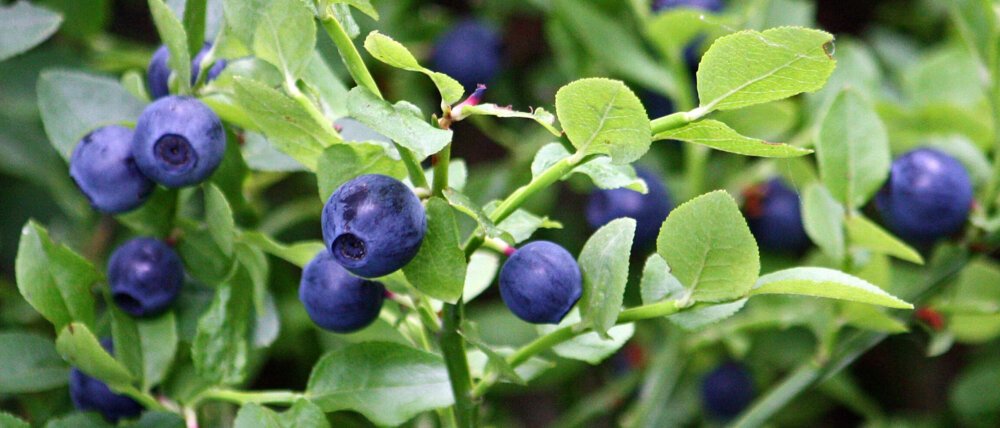
Bilberry (Vaccinium myrtillus) is the tart, deep-purple cousin of the blueberry that grows wild across European forests and moorland. It’s been used medicinally for over a thousand years1, and, like blueberries, this little fruit is remarkably good for the cardiovascular system.
A reason for this is bilberry’s anthocyanin content, the pigment responsible for their inky colour. Anthocyanins have been found to protect and help repair the fine blood vessels and capillaries that keep our circulation running well, guarding them against everyday oxidative damage2,3. Bilberry has been shown to improve venous insufficiency, reduce oedema, calm inflamed tissue, and speed the healing of venous ulcers, by cutting down fluid and protein leakage from damaged vessels2,3,4,5.
Bilberry’s benefits don’t stop at the veins. Their anthocyanosides help stabilise collagen, the structural protein that keeps capillary walls strong and resilient6. These also have a gentle antiplatelet action, helping to prevent the kind of clotting that can lead to strokes and heart attacks, without the bleeding risk associated with stronger blood-thinning drugs6. Research following acute myocardial infarction (a heart attack) has even found bilberry supplementation beneficial for vascular recovery3,7.
Interestingly, bilberry can also positively impact oral health. Regular consumption has been shown to reduce gingival inflammation8, which matters more than it might seem: untreated gum disease is a recognised risk factor for infective endocarditis, a serious heart condition9.
Apart from just eating the fruit, medicinally standardised fruit extracts (usually standardised to 36% anthocyanins) are the most researched form, though a simple decoction of the dried berries works well too. Reassuringly, there are no known restrictions in pregnancy or breastfeeding, and bilberry is often specifically indicated for pregnancy-related venous complaints10. The main caution is for anyone already on anticoagulant or antiplatelet medication, where bilberry’s blood-thinning effects could potentially add to the medication’s actions3,11.
Given its long history of safe use and its gentle but wide-ranging cardiovascular benefits, bilberry is a great addition to the diet and an important medicine.
References
- Fisher, C. (2018). Materia medica of western herbs. Aeon Books.
- Bokelmann, J. M. (2022). Medicinal herbs in primary care. Elsevier.
- Bone, K., & Mills, S. (2013). Principles and practice of phytotherapy (2nd ed.). Elsevier Health Sciences.
- Chevallier, A. (2016). Encyclopedia of herbal medicine. Dorling Kindersley.
- Vaneková, Z., & Rollinger, J. M. (2022). Bilberries: curative and miraculous — a review on bioactive constituents and clinical research. Frontiers in Pharmacology, 13, 909914.
- Hedley, C., & Shaw, N. (2022). Plant medicine. Aeon Books.
- Bryl-Górecka, P., et al. (2020). Bilberry supplementation after myocardial infarction decreases microvesicles in blood and affects endothelial vesiculation. Molecular Nutrition & Food Research, 64(20), e2000108.
- Widén, C., et al. (2015). Consumption of bilberries controls gingival inflammation. International Journal of Molecular Sciences, 16(5), 10665–10673.
- British Heart Foundation (BHF). (n.d.). How is gum disease linked to heart problems and diabetes?
- Alfs, M. (2022). 300 herbs: their indications and their contraindications. Aeon Books.
- Brinker, F. (2010). Herbal contraindications and drug interactions plus herbal adjuncts with medicines (4th ed.). Eclectic Medical Publications.
Image: Vaccinium myrtillus, Anneli Salo CC BY-SA 3.0