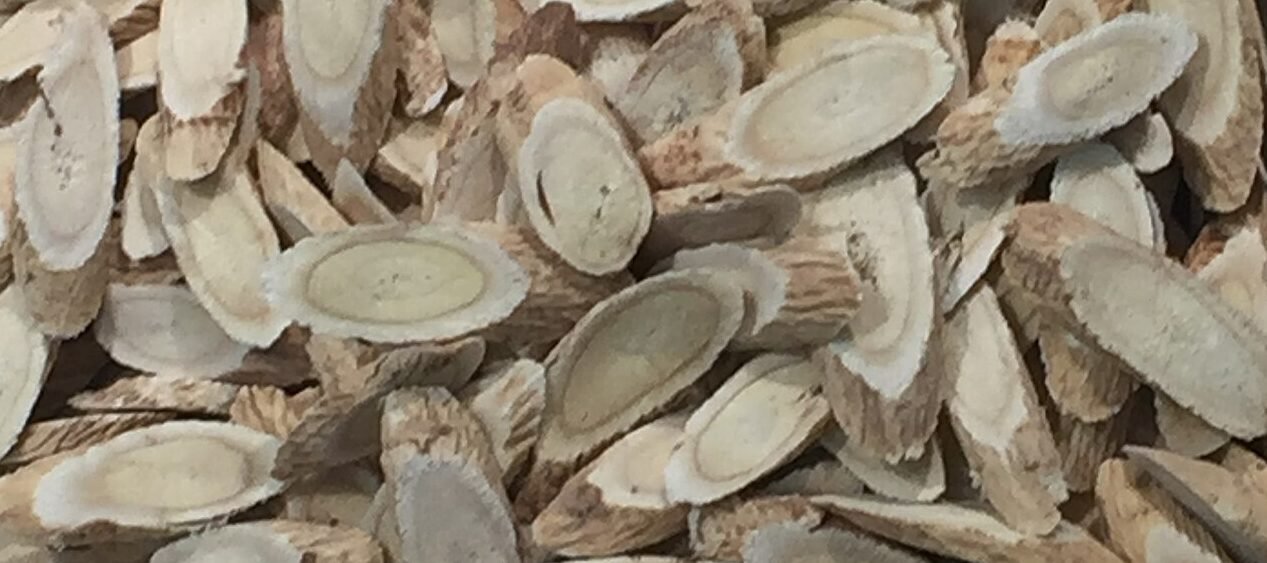
If you find yourself catching every cold that goes round, or you’re looking to build immune resilience for the long haul, Astragalus mongholicus (milk vetch) root is potentially a herbal remedy to consider. Native to Mongolia and China, it has centuries of traditional use as a tonic and adaptogenic for strengthening immunity1.
A tonic, not a quick fix
Astragalus doesn’t knock out a cold overnight. It works best long-term, gradually building and maintaining a resilient immune system rather than firefighting acute infection2. This makes it well suited to ongoing use over weeks or months, and it’s generally considered gentle, with a low risk of side effects when taken appropriately3.
How astragalus supports your defences
Astragalus encourages the body to produce interferon, a protein that helps cells resist viral attack, and supports natural killer cells, the immune system’s frontline patrol against infected or abnormal cells4.
Polysaccharides in astragalus root stimulate lymphocytes and enhance T cell activity, both central to a well-functioning immune response5. One study found that when astragalus is taken orally, particular compounds travel to the Peyer’s patches, clusters of lymphatic tissue in the gut wall, where they help kick-start the body’s wider immune signalling6.
Safety
Astragalus is immune-supportive and it is generally not recommended during acute infections. As with any medications, anyone with an autoimmune condition or taking immunosuppressant medication should seek professional advice before use, as its stimulating effects may not suit every situation7.
Ready to build your resilience?
Astragalus reminds us that sometimes the most effective medicine is the kind that builds strength slowly and patiently. If recurrent infections or an immune system that needs steady support resonates, astragalus could be helpful. Book a consultation to find out whether it’s the right fit for you, as part of a personalised herbal approach to improving your health.
References
- McIntyre A. The complete herbal tutor. London: Aeon Books; 2019.
- Chevallier A. Encyclopedia of herbal medicine. London: Dorling Kindersley; 2016.
- Holmes P. The energetics of western herbs. 4th ed. London: Aeon Books; 2020.
- Bone K, Mills S. Principles and practice of phytotherapy. 2nd ed. Edinburgh: Elsevier Health Sciences; 2013.
- Zheng Y, Ren W, Zhang L, Zhang Y, Liu D, Liu Y. A review of the pharmacological action of astragalus polysaccharide. Front Pharmacol. 2020;11:349. doi:10.3389/fphar.2020.00349
- Zhang Q, Li L, Hao S, Liu M, Huo C, Wu J, et al. A lymphatic route for a hyperbranched heteroglycan from Radix Astragali to trigger immune responses after oral dosing. Carbohydr Polym. 2022;292:119653. doi:10.1016/j.carbpol.2022.119653
- Brinker F. Herbal contraindications and drug interactions plus herbal adjuncts with medicines. 4th ed. Sandy (OR): Eclectic Medical Publications; 2010.
Image: Fumikas Sagisavas, CC0, via Wikimedia Commons
