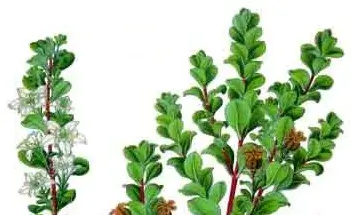
Buchu is a small, aromatic blackcurrant-scented South African shrub. Its full, currently accepted, scientific name is Agathosma betulina (P.J.Bergius) Pillans, although the attributing South African botanist Neville Stuart Pillans, 1884–1964 is not a relation of mine1,2.
Buchu was a prized remedy among the Khoisan and other indigenous South African peoples, used both spiritually and medicinally3. It travelled to Europe and then the US in the early nineteenth century, where it was used for urinary and kidney complaints3, although its popularity faded with the development of antibiotics.
Traditionally, buchu has been used for cystitis, urethritis, dysuria (difficult or painful urination) and bladder and kidney stones, as well as fluid retention and lingering urinary infections4,5. Its leaves contain around 2% essential oil, largely made up of a compound called diosphenol, known as ‘buchu camphor’, which is responsible for its diuretic action6. A current use of buchu is as a blackcurrant flavouring3. The rutin in buchu is an antioxidant and acts as an anti-inflammatory by inhibiting the action of the enzyme lipoxygenase which is involved in producing inflammatory signalling molecules in the human body7.
There is scant modern research on buchu’s antimicrobial action. However in vitro digestion models suggest this activity may actually increase once it passes through the digestive process, hinting that its effects in the body could be greater than lab tests alone suggest8.
Caution is required as diosphenol, along with pulegone and diosmin, can be irritating to mucosal tissue9, so buchu is best avoided during acute inflammation or when taken on an empty stomach. It is also worth noting that South Africa launched a cultivation project back in 1999 after wild populations were hit by over-harvesting and habitat loss10, so sustainable sourcing is vital.
Used sensibly, buchu often works well as a gentle but effective urinary disinfectant. Regular use may even help prevent the cycle of recurring cystitis or urethritis11. It is mild enough for children, useful for those with reduced mobility such as wheelchair users prone to recurrent infections, and can be taken alongside or instead of antibiotics12. However, various cautions and contraindications mean that professional advice should be sought before considering taking buchu.
References
- Royal Botanic Gardens Kew (RBGK) (2024a) Agathosma betulina. Plants of the world online. Retrieved August 02, 2026, from https://powo.science.kew.org/taxon/urn:lsid:ipni.org:names:770863-1
- Pillans, Neville Stuart (1884–1964) on JSTOR – Global Plants. Retrieved August 02, 2026, from https://plants.jstor.org/stable/10.5555/al.ap.person.bm000006543
- Brendler, T., & Abdel-Tawab, M. (2022). Buchu (Agathosma betulina and A. crenulata): Rightfully forgotten or underutilized. Frontiers in Pharmacology, 13.
- Thomsen, M. (2022). The phytotherapy desk reference (6th ed.). Aeon Books.
- Bartram, T. (1998). Bartram’s encyclopedia of herbal medicine. Robinson.
- Williamson, E. M. (2003). Potter’s herbal cyclopaedia. The C.W. Daniel Company.
- Hoffmann, D. (2003). Medical herbalism. Healing Arts Press.
- Bone, K., & Mills, S. (2013). Principles and practice of phytotherapy (2nd ed.). Elsevier Health Sciences.
- Brinker, F. (2010). Herbal contraindications and drug interactions plus herbal adjuncts with medicines (4th ed.). Eclectic Medical Publications.
- Hoegler, N. (2000). Plight of buchu underscores the need for international herb development. Herbalgram, 50, 16.
- Chevallier, A. (2016). Encyclopedia of herbal medicine. Dorling Kindersley.
- Hedley, C., & Shaw, N. (2022). Plant medicine. Aeon Books.
Image: By Franz Eugen Köhler, Köhler’s Medizinal-Pflanzen